AC Not Cooling in Abbotsford? 7 Quick Checks Before You Call for Air Conditioner Repair
Before you wait on hold during a heat wave, run through these safe checks. Some fixes take five minutes. Others definitely need a tech — and we'll tell you which is which.
🗓 Updated Summer 2025⏱ 8 min read🔧 AbbotsfordHVAC.ca
🔍 7 safe DIY checks
⚡ Most common repair causes
💰 Repair vs. replace guidance
An AC running but not cooling is almost always a fixable problem — once you know what to check.
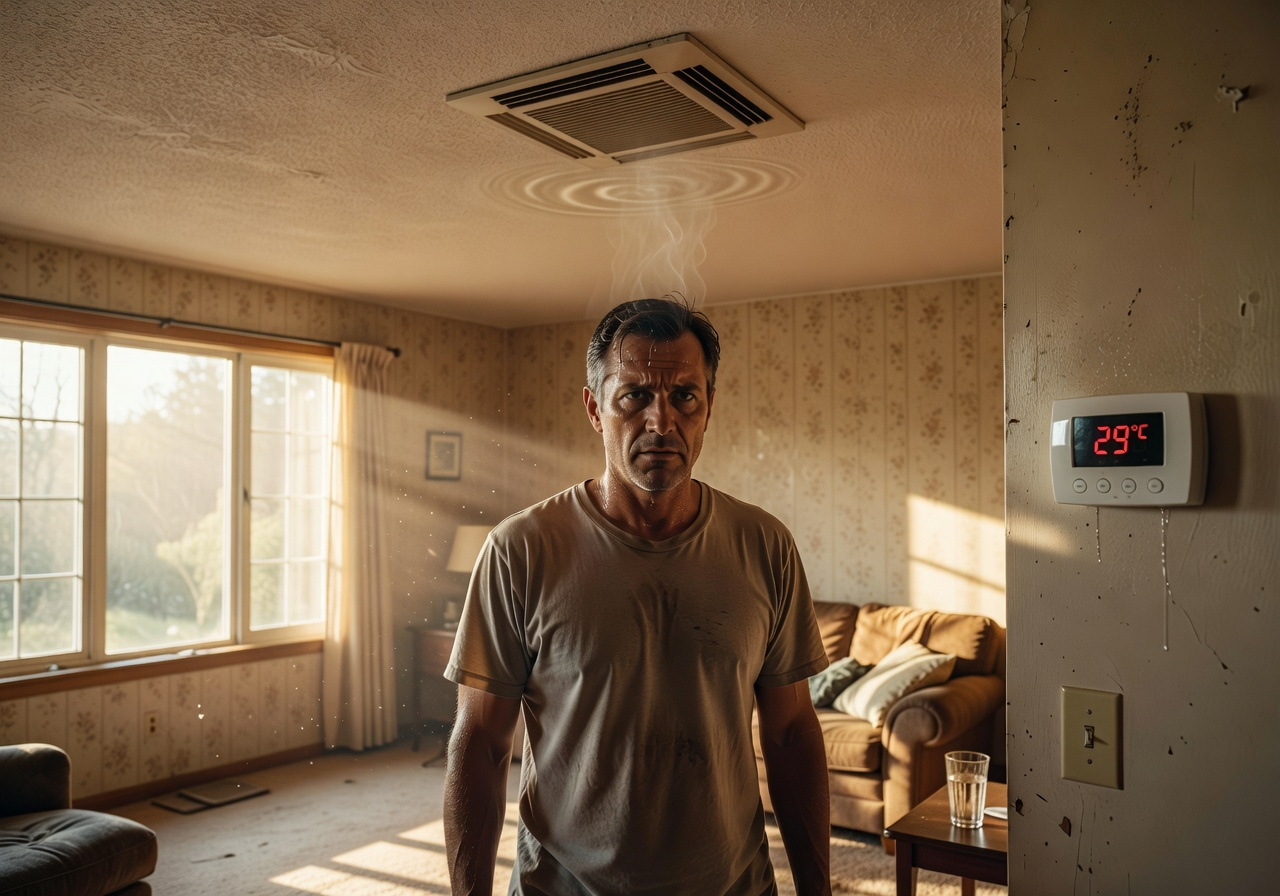
It's 32°C in Abbotsford, the Fraser Valley sun is hammering your roof, and your AC is running — but the air from the vents is warm. Before you call for repair and wait in a queue behind every other homeowner with the same problem, there are several safe checks you can do yourself that might get your system running again in minutes.
This guide walks you through exactly what to check and what those checks mean, the most common repair causes Abbotsford technicians deal with every summer, what repairs typically cost, and how to decide whether your system is worth repairing or whether this breakdown is the sign to replace it.
Signs Your AC Needs Repair — Not Just a Settings Tweak
First, confirm you're dealing with an actual system problem rather than a settings issue. These are the symptoms that indicate something is genuinely wrong:
🌡️
Warm Air from Vents
System is running but air isn't noticeably cooler than room temperature. Points to refrigerant, compressor, or coil problems.
💨
Weak or No Airflow
Barely any air from vents despite the system running. Usually a failing blower motor, severely clogged filter, or frozen evaporator coil.
🔁
Short Cycling
System kicks on for a few minutes, shuts off, then repeats continuously. Often caused by low refrigerant, a dirty filter, or an oversized system.
🔊
Unusual Noises
Banging suggests loose components. Grinding points to motor bearing wear. Hissing or bubbling often means refrigerant is escaping a leak.
🧊
Ice on Refrigerant Lines
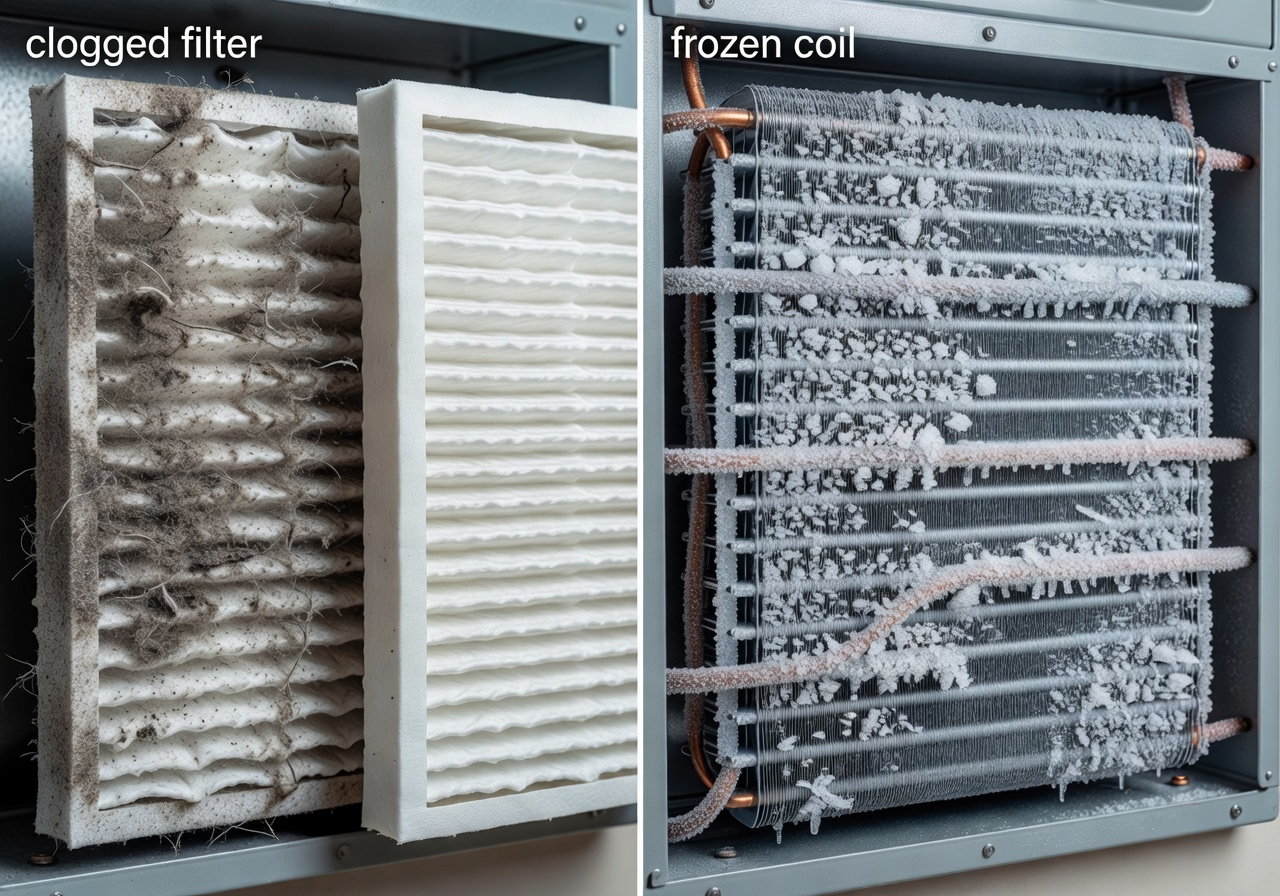
Visible ice on the copper lines or indoor unit means the evaporator coil is freezing. Turn the system off and call a tech — running it damages the compressor.
💧
High Indoor Humidity
AC removes moisture as it cools. A sticky, humid house despite the system running indicates the system isn't completing proper cooling cycles.
7 Safe Checks to Try Before Calling an Abbotsford AC Technician
These checks are safe for any homeowner. None require opening electrical panels, touching refrigerant lines, or accessing internal components. Work through them in order — one of these solves the problem more often than you'd expect.
1
Check the Thermostat Mode and Setpoint DIY ✓
Confirm the thermostat is set to COOL (not FAN or HEAT), the setpoint is below the current room temperature, and no scheduling or “away” mode is overriding your settings. If you have a smart thermostat, open the app — sometimes a firmware update or someone else's adjustment is the entire problem.
💡 Smart thermostats can show the system as “satisfied” even when the room feels warm, if the sensor is in a cooler part of the home. Check the actual room temperature reading against the thermostat sensor location.
2
Check the Breaker Panel DIY ✓
Your AC uses at least two breakers — one for the indoor air handler and one for the outdoor condenser. Locate both and check if either has tripped to the middle position. Flip it fully off, then back on. If it trips again immediately, stop — a repeatedly tripping breaker indicates an electrical fault that needs a technician.
💡 The outdoor unit breaker is often in a separate disconnect box on the exterior wall near the condenser — don't miss it. After a power surge or BC Hydro outage, both breakers should be checked.
3
Check and Replace the Air Filter DIY ✓
A severely clogged filter is one of the most common causes of poor cooling and frozen coils in Abbotsford homes during peak summer. Hold the filter up to a light — if you can't see light through it, replace it. A $10 filter from any hardware store may restore your system to full performance immediately.
💡 In the Fraser Valley — with agricultural dust, cottonwood fluff, and heavy pollen seasons — filters often need replacement every 30–45 days in summer, not the 90 days printed on the packaging.
4
Check the Outdoor Condenser Unit DIY ✓
Go outside and look at the condenser. Is the fan spinning? Check whether grass clippings, cottonwood seeds, or yard debris have packed against the fins. Clear the area and maintain at least two feet of clearance on all sides. You can gently rinse the fin surfaces with a garden hose on low pressure to remove surface buildup.
💡 If the outdoor unit is running but the fan blade isn't spinning, a failed capacitor is the likely cause. That's a tech job — but knowing this when you call helps the dispatcher send the right parts.
5
Check Indoor Vents and Return Registers DIY ✓
Walk through the home and confirm all supply vents are fully open and unobstructed by furniture, rugs, or curtains. Check the return air grille — usually a larger, slotted grille in a hallway wall or ceiling — and make sure it isn't blocked. Return air restriction is as damaging to system performance as a clogged filter.
6
Check the Condensate Drain Line DIY ✓
Most AC systems have a safety float switch that shuts the system off if the condensate drain backs up. Look for standing water in the drain pan below your indoor air handler. If the pan is full, the drain line is blocked. A wet-dry vacuum on the drain line end can often clear it.
💡 If the pan is overflowing or you see water damage on the ceiling below the air handler, stop using the system and call a tech. Water damage repair is far more expensive than drain clearing.
7
Power Cycle the System DIY ✓
Turn the system off at the thermostat, flip both AC breakers off at the panel, wait a full five minutes, then restore power and set the thermostat back to cool. Modern AC control boards can get stuck in a fault state — a full power cycle clears it. This solves the problem more often than most homeowners expect.
💡 After restoring power, give the system 10–15 minutes before concluding it's still not working. The compressor has a built-in timed delay after power-up to protect it from immediately short cycling.
🚫 Stop Here — These Require a Certified HVAC Technician
Opening the electrical disconnect box at the outdoor unit or accessing any internal electrical panels
Touching refrigerant lines, Schrader valve ports, or anything related to the refrigerant circuit — refrigerant handling requires TECA certification and specialized equipment
Attempting to add refrigerant yourself — it's illegal in Canada without certification, and incorrect charging destroys compressors
Disassembling the indoor air handler or outdoor condenser unit housing
Any repair involving capacitors, contactors, or internal wiring
A clogged filter (left) is a 5-minute DIY fix. A frozen coil (right) means the system must be shut off — running it in that state can destroy the compressor.
Common AC Issues Abbotsford Technicians Fix Every Summer
If the seven checks above didn't resolve the problem, one of the following is almost certainly what your technician will find. Understanding the likely issue helps you have a more informed conversation when you call.
Problem
What You'll Notice
Severity
DIY?
Failed Capacitor
Outdoor unit hums but fan won't start; system clicks on then immediately shuts off
Moderate
No — electrical
Low Refrigerant / Leak
Warm air, ice on lines, hissing sound, long run times with no cooling
High
No — certified only
Dirty Condenser Coils
System runs constantly but can't keep up; outdoor unit runs very hot
Moderate
Surface rinse only
Frozen Evaporator Coil
Little or no airflow; ice on indoor unit; water dripping
Moderate
Shut off — call tech
Failed Contactor
Outdoor unit won't start; clicking sound at condenser with no engagement
Moderate
No — electrical
Blower Motor Failure
Outdoor unit running but very little air from indoor vents
High
No — motor replacement
Thermostat Fault
Inconsistent cooling, system ignoring setpoint, display errors
Lower
Check settings first
Compressor Failure
Outdoor unit won't run; loud grinding or silence where the compressor should be
Critical
No — consider replacement
“The two most common calls we get during Abbotsford heat waves are failed capacitors and low refrigerant. Both are repairable in a single visit — and both would have been caught during an annual tune-up.”
— AbbotsfordHVAC.ca Service Team
Still not cooling after the 7 checks? Our Abbotsford technicians offer same-day diagnosis and repair — with a clear quote before any work begins.
Repair costs vary based on what's failed and the age of the system. Here's a realistic breakdown for the most common repairs Abbotsford HVAC companies handle:
Diagnostic Visit
$80–$150
Service Call
Usually applied toward repair cost. Includes system assessment and diagnosis of the root cause.
Minor Repair
$150–$500
Capacitor / Contactor / Thermostat
Fast fixes — typically completed same visit. Capacitors are among the most common mid-summer failures.
Moderate Repair
$300–$900
Refrigerant Recharge + Leak Repair
Includes leak detection, repair, and recharge with R-410A. Leak location determines scope.
Larger Repair
$600–$1,800
Coil Cleaning / Blower Motor
Multi-hour labour jobs. Parts availability for older systems can affect scheduling.
Major Repair
$1,500–$3,500+
Compressor Replacement
Most expensive single repair. On systems over 10 years old, replacement is usually more cost-effective.
Maintenance Plan
Priority
Plan Members
Priority scheduling during peak demand, discounted repair rates, no separate diagnostic fee on covered visits.
Most diagnostic visits take 30–90 minutes. If common parts like capacitors or contactors are needed, many repairs are completed in the same visit. Larger parts orders may require a return visit within 1–3 business days.
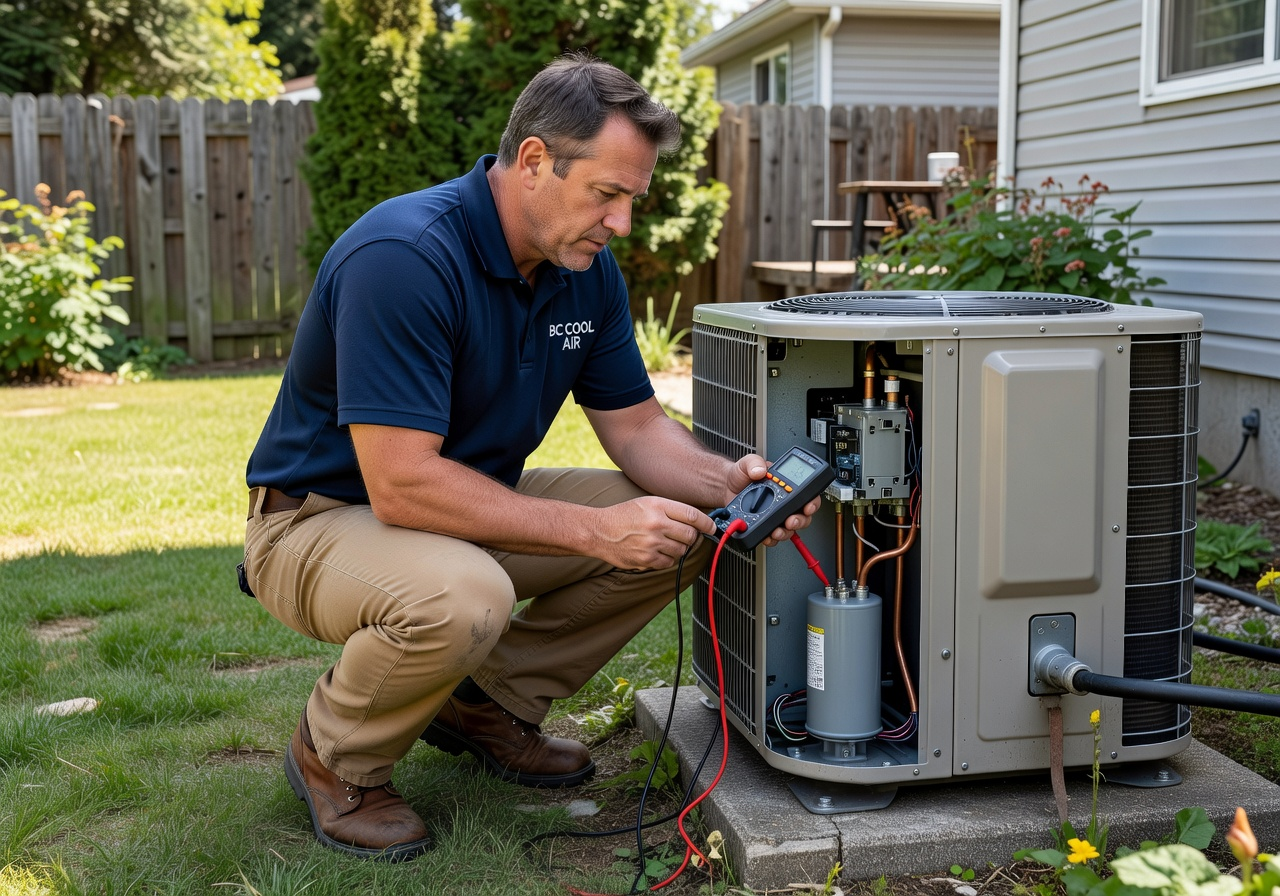
A capacitor test takes minutes with a multimeter — it's one of the first components a tech checks when an outdoor unit won't start properly.
When to Repair — and When to Replace
Not every AC breakdown is worth repairing. Sometimes the honest answer is that the system has run its course. Here's a clear framework for making that decision:
🧮
The $5,000 Rule: A Simple Decision Framework
Multiply the system's age in years by the repair cost in dollars. If the result exceeds $5,000, replacement is worth serious consideration. A 12-year-old system facing a $500 capacitor repair = $6,000 — borderline. A 14-year-old system facing a $1,200 coil repair = $16,800 — replacement is the clear call.
Repair Makes Sense When
Fix It and Keep Going
System is under 10 years old
First significant breakdown on an otherwise reliable system
Failed component is minor — capacitor, contactor, thermostat
Repair cost is less than 30% of replacement cost
System uses current refrigerant (R-410A or newer)
No other performance complaints beyond the current failure
Replacement Makes Sense When
Cut Your Losses
System is 12–15+ years old
Second or third major repair in recent seasons
Compressor failure on an older unit
System uses R-22 refrigerant (discontinued — recharge is expensive)
Energy bills have been steadily climbing despite “working” AC
New heat pump system qualifies for CleanBC rebates
If replacement is the direction, a modern high-efficiency system will use significantly less electricity than an older unit — often enough to offset a monthly financing payment. And upgrading to a heat pump means your new cooling system also handles your heating. We walk through both options honestly at the time of diagnosis, with no pressure in either direction.
Frequently Asked Questions
Why is my AC running but not cooling?
The most common causes are low refrigerant from a slow leak, a dirty condenser coil, a failed capacitor, a severely clogged air filter, or a frozen evaporator coil. Work through the 7 checks in this article first — a dirty filter or thermostat issue solves the problem more often than most homeowners expect. If those checks don't resolve it, a technician's diagnosis will pinpoint the root cause quickly.
How much does AC repair cost in Abbotsford?
A diagnostic service call runs $80–$150, typically applied toward repair cost. Capacitor or contactor replacement is $150–$500. Refrigerant recharge with leak repair runs $300–$900. Coil or blower motor work ranges $600–$1,800. Compressor failures on older systems ($1,500–$3,500+) often make replacement more cost-effective. We provide a clear itemized quote before any work begins.
How quickly can I get AC repair in Abbotsford?
During heat waves, most Abbotsford HVAC companies have 1–3 day waits for standard calls. Same-day service is often available, especially when booked early in the day. Customers on maintenance plans receive priority scheduling — during peak summer demand, that priority can mean the difference between same-day service and waiting several days.
Should I repair or replace my AC?
The $5,000 rule is a useful guide: multiply the system's age by the repair cost. If the result exceeds $5,000, replacement deserves serious consideration. A system over 12–15 years old facing a major repair is usually better replaced — particularly given the efficiency gains of modern systems and BC CleanBC rebates available for heat pump installations. We present both options honestly at the time of diagnosis.
No ductwork in a suite or addition? A ductless mini-split may solve your cooling problem more cost-effectively than extending your existing system.
AC Still Not Cooling After the Checks? Let's Fix It Today.
Book a same-day service visit online or call us directly. We serve all of Abbotsford, Mission, Chilliwack, and the Fraser Valley — with honest diagnosis and upfront pricing before we start any work.