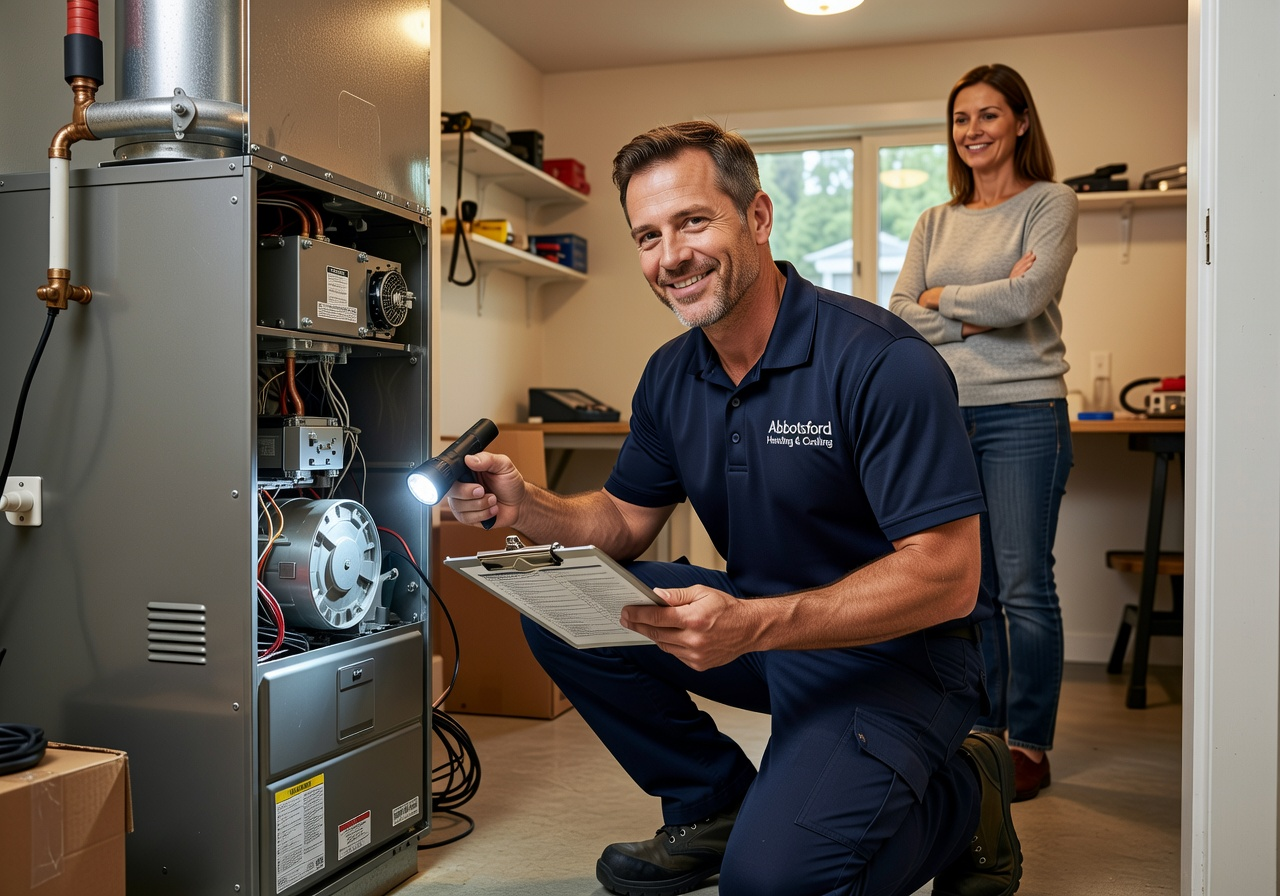
Your HVAC system is the most expensive mechanical system in your home — and the one most homeowners ignore until it stops working. In Abbotsford, that usually means an emergency call on the coldest January night or the hottest August afternoon. A simple annual maintenance routine prevents most of those failures.
The good news: basic HVAC maintenance isn't complicated. There's a short list of things you can do yourself and a once-a-year professional tune-up that covers everything else. Together, they extend equipment life by years, maintain peak efficiency, and keep your warranty valid.
Your Seasonal HVAC Maintenance Calendar
Break your HVAC maintenance into four seasonal checkpoints. The tasks are quick — most homeowners spend 20–30 minutes per season on the DIY portion.
- Replace furnace filter after heating season
- Clear debris from outdoor AC/heat pump unit
- Test AC before summer — run for 15 min and check for cooling
- Check condensate drain isn't blocked from winter
- Book spring AC tune-up with a technician
- Check filter monthly (wildfire smoke clogs fast)
- Keep outdoor unit clear of grass, weeds, and leaves
- Monitor for unusual noises or reduced cooling output
- Ensure vents are unobstructed by furniture or rugs
- Check thermostat batteries if using a smart thermostat
- Replace filter before heating season starts
- Test furnace before first cold night — don't wait until December
- Check/clear furnace flue and exhaust venting
- Book annual fall furnace tune-up
- Check CO detector batteries and expiry date
- Check filter mid-winter (monthly if running continuously)
- Keep outdoor heat pump clear of snow/ice buildup
- Monitor for short-cycling or unusual heating behaviour
- Ensure all vents and returns are open and unblocked
- Know the signs of a failing heat exchanger (cracking or rusting)
DIY Tasks: What Every Homeowner Can Do
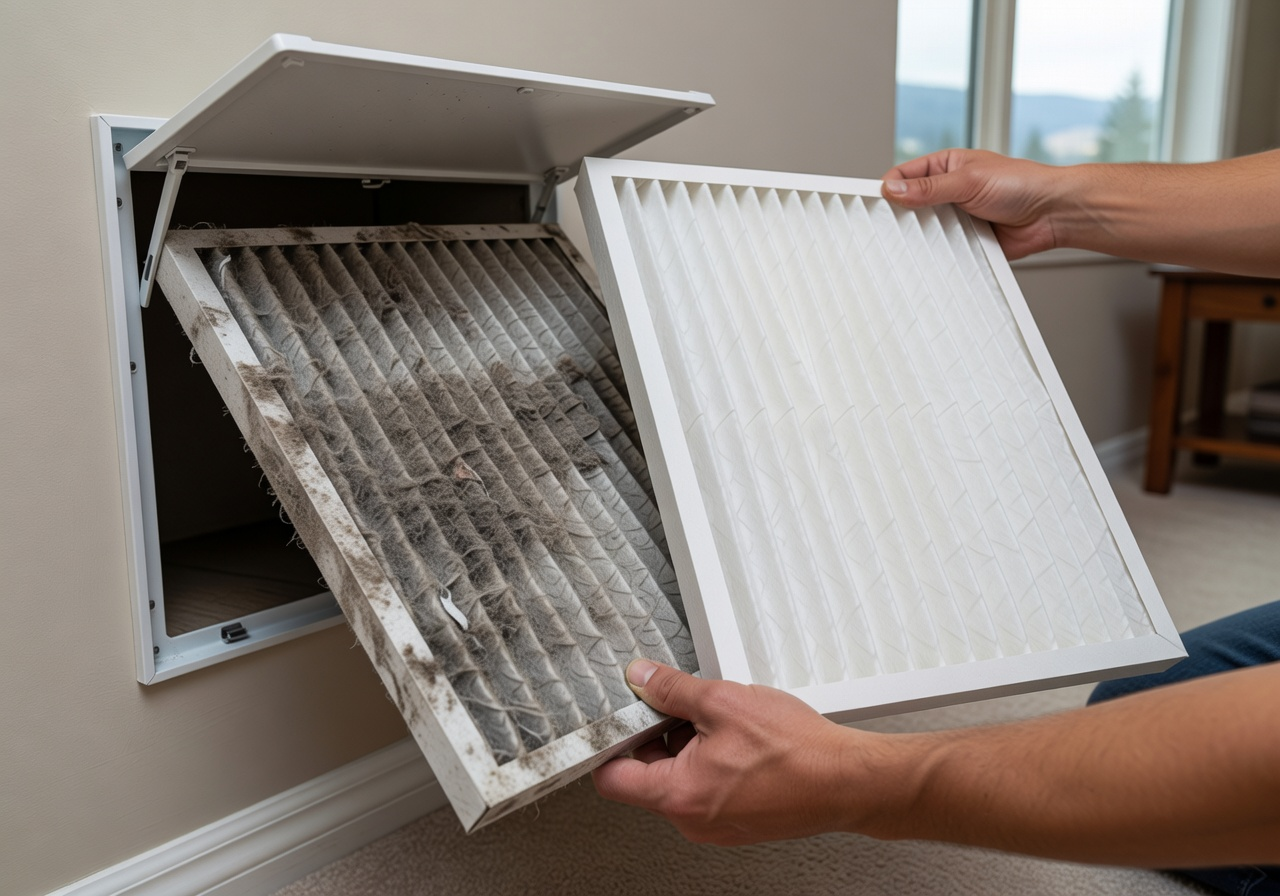
These tasks require no tools, no HVAC experience, and take only minutes. They account for a significant portion of preventable system failures when neglected.
Professional Tune-Up: What a Technician Does That You Can't
Annual professional service goes well beyond what any homeowner can check with a flashlight and a filter. Here's what a licensed HVAC technician covers during a full tune-up:
- Heat exchanger inspection — cracks or rust allow carbon monoxide to enter living space. This is the most safety-critical check.
- Burner cleaning and flame pattern check — ensures complete combustion, proper ignition, and correct flame colour
- Gas pressure measurement — confirms correct input pressure for efficient combustion
- Flue and exhaust venting inspection — checks for blockages, back-drafting, or deterioration
- Electrical component check — inspects capacitors, contactors, wiring connections, and control board
- Blower motor and belt inspection — checks airflow rate, belt tension, and motor condition
- Ignitor test — verifies the hot surface ignitor or spark ignitor fires reliably
- Safety control test — verifies limit switches, pressure switches, and rollout switches operate correctly
- Filter check and replacement recommendation
- Full operational test — measures supply and return air temperatures, confirms proper temperature rise
“The heat exchanger inspection is why annual furnace maintenance isn't optional — it's the only way to detect a crack before it starts leaking carbon monoxide into your home. No homeowner can check this themselves.”
— AbbotsfordHVAC.ca Technical TeamIf your furnace is more than 15 years old and hasn't been serviced in several years, schedule a tune-up before this heating season — not after. Heat exchanger cracks are undetectable without a professional inspection, and a cracked exchanger is a carbon monoxide risk. Don't wait for symptoms; CO is odourless.
DIY vs. Professional: What's the Right Split?
- Filter replacement every 1–3 months
- Outdoor unit clearance checks
- Pre-season test runs
- Vent and return checks
- Thermostat battery replacement
- CO detector testing
- Heat exchanger inspection
- Burner cleaning and gas pressure check
- Refrigerant level verification
- Electrical component inspection
- Flue and venting inspection
- Full safety and performance test
Should You Sign Up for an HVAC Maintenance Plan?
Most HVAC contractors in Abbotsford offer annual maintenance plans — typically $150–$300/year — that bundle one or two tune-up visits with priority scheduling and parts discounts. They're worth considering if:
- Your system is 8+ years old and approaching the age when problems become more common
- You have both a furnace and central AC (plans often cover both)
- You want the peace of mind of priority emergency service during peak seasons
- You frequently forget to schedule annual service on your own
Book furnace tune-ups in September and AC tune-ups in March or April. These are the off-peak windows — you get faster scheduling, and any problems found are addressed before you actually need the system. Wait until November or June and you're competing with everyone else whose equipment just failed.
FAQ: HVAC Maintenance in Abbotsford
Will skipping maintenance void my warranty?
For most equipment manufacturers, yes. Annual professional maintenance is typically required to keep the manufacturer's warranty valid. Check your equipment documentation — most require documented annual service. This is another reason a maintenance plan with a record of visits is valuable.
How do I know if my system needs repair vs. just maintenance?
Signs that go beyond normal maintenance and indicate a repair is needed: unusual noises (banging, squealing, rattling), short-cycling (the system turns on and off every few minutes), significant efficiency drops (much higher energy bills), visible water around the air handler or furnace, or the system failing to reach the thermostat setpoint on a mild day.
How long does a furnace last with proper maintenance?
A gas furnace that receives annual professional service and regular filter changes typically lasts 18–25 years. Without maintenance, the same furnace may fail in 12–15 years — and the last few years of a neglected system's life usually involve escalating repair costs. The math on maintenance is straightforward.